Every figure on this page is a load a listing states. None of them is a statement about your wall. The line below sorts brackets by what they claim to carry; what the wall carries is a separate question, and this page does not answer it.
Range line
Stated load limit · lb
Further right means the listing claims a higher limit. It says nothing about the wall behind the bracket.
Two positions on this line state their load without any fixing into studs, so they are marked with a hollow ring instead of a filled marker. They sit near brackets that reach structure, and the claims are not the same claim.
Two positions on this line state their load without any fixing into studs, so they are marked with a hollow ring instead of a filled marker. They sit near brackets that reach structure, and the claims are not the same claim.
0 lb
35
70
105
140 lb
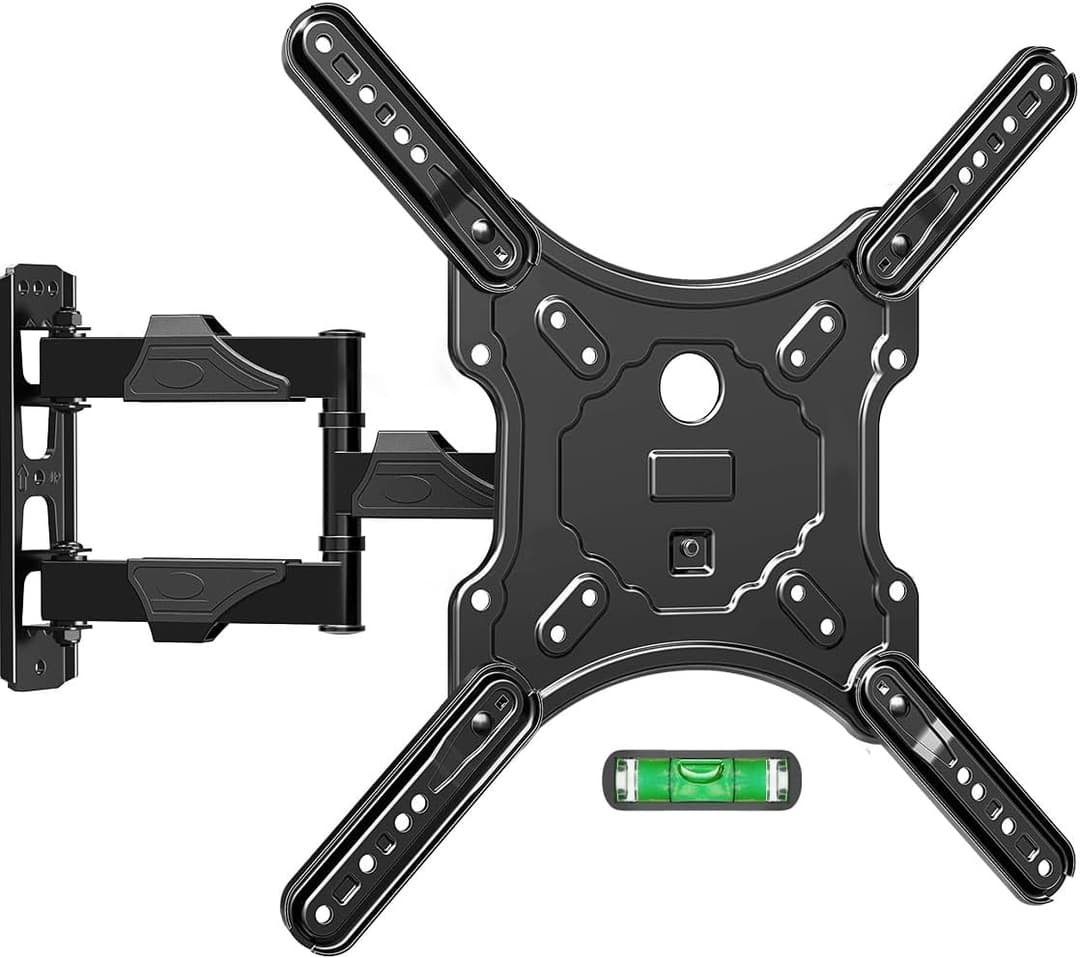
44 lbmonTEK Full Motion Small Mount, 13-43in
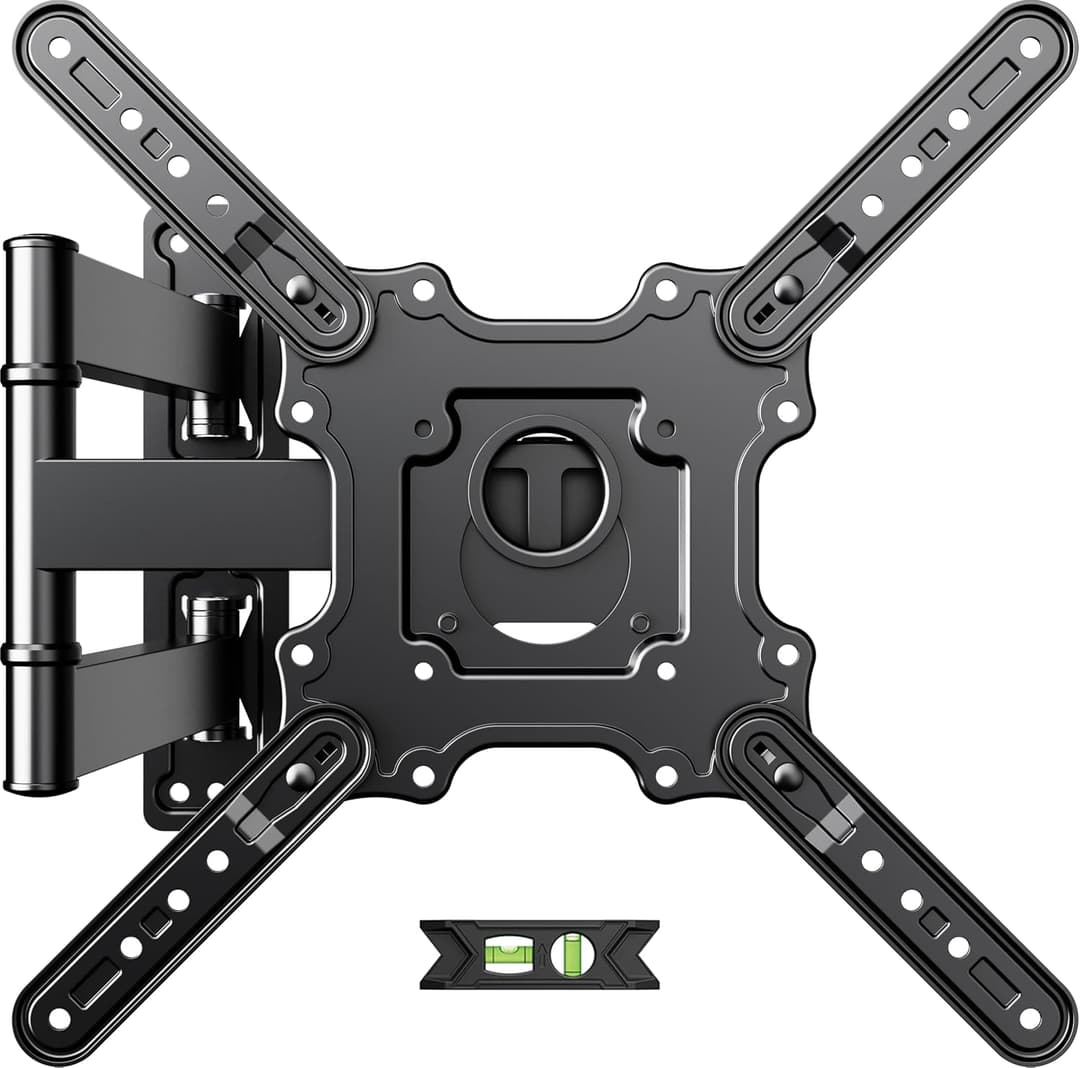
44 lbPipishell Full Motion Mount, 13-43in
77 lbELIVED Full Motion Mount, 26-60in
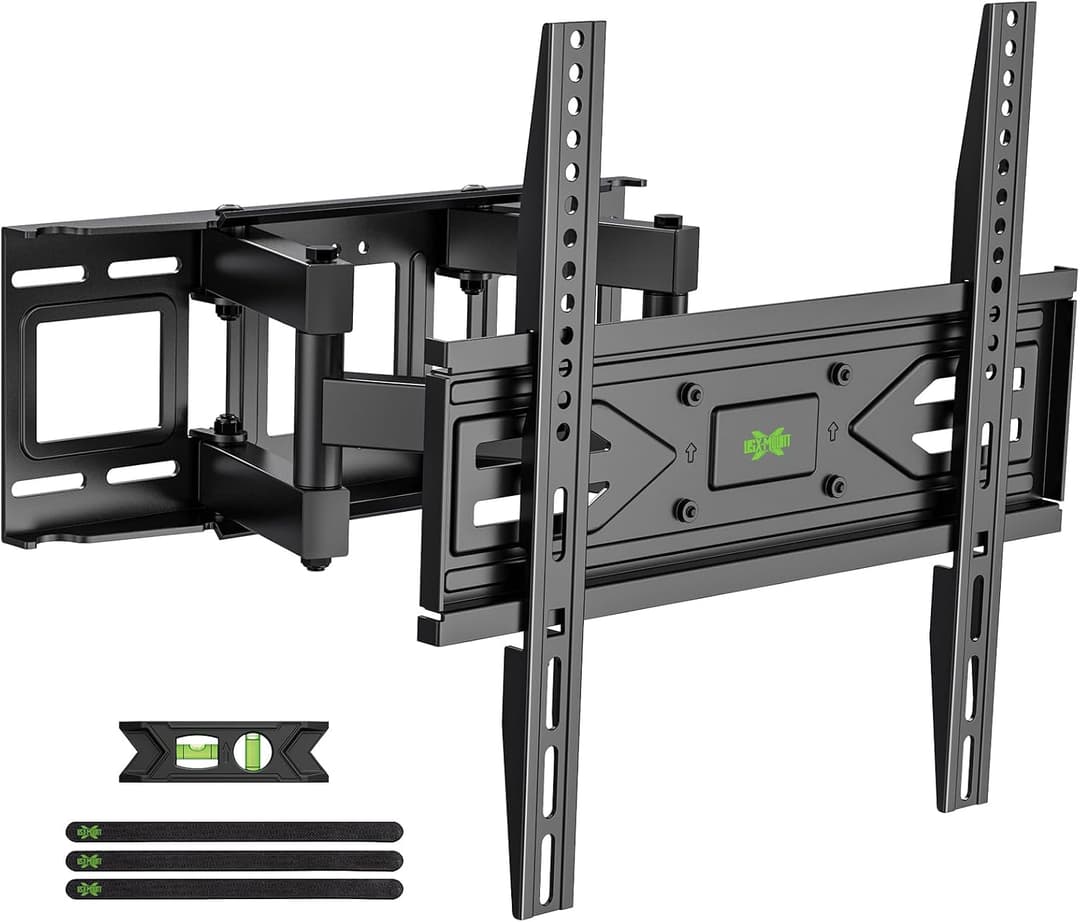
77 lbUSX Mount Single Stud Full Motion, 26-60in
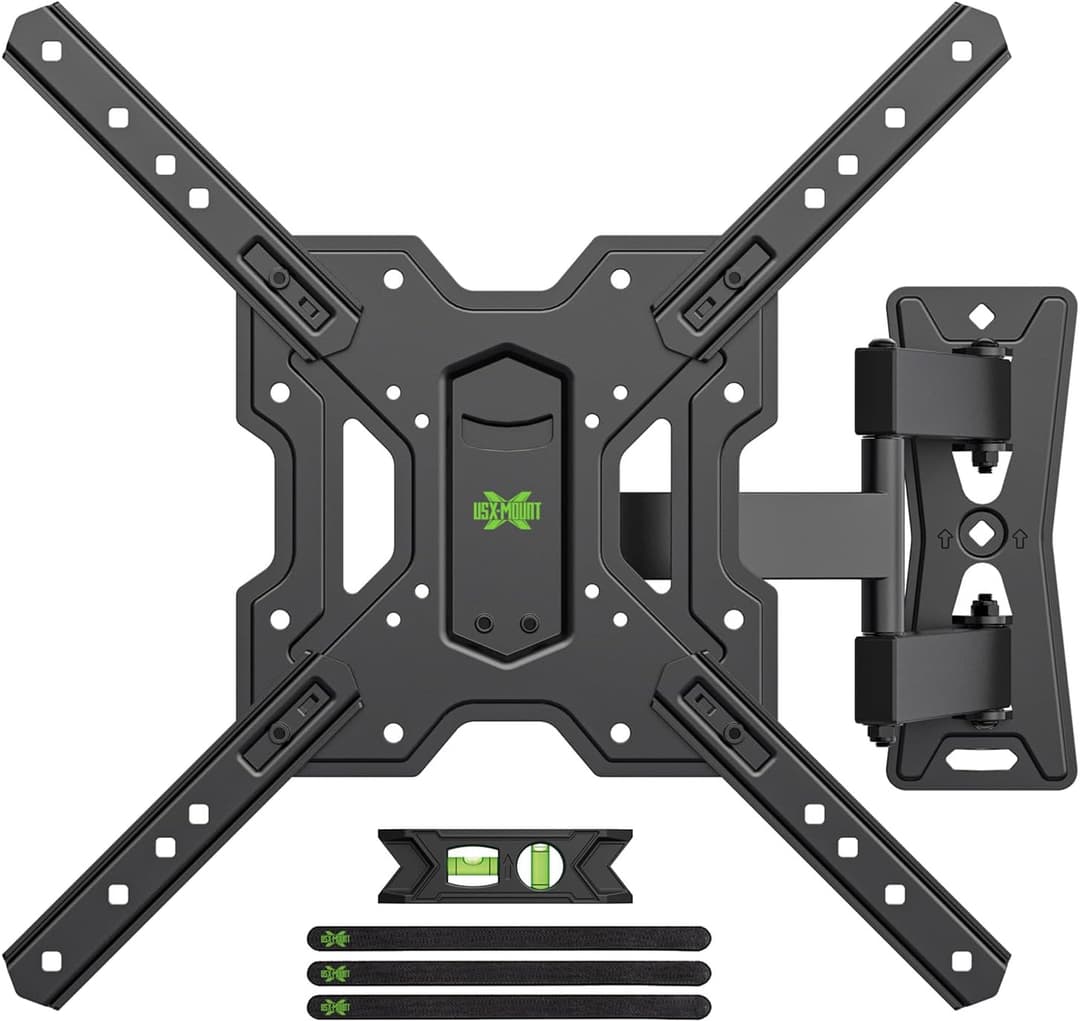
77 lbUSX Mount XMM006 Full Motion, 26-65in
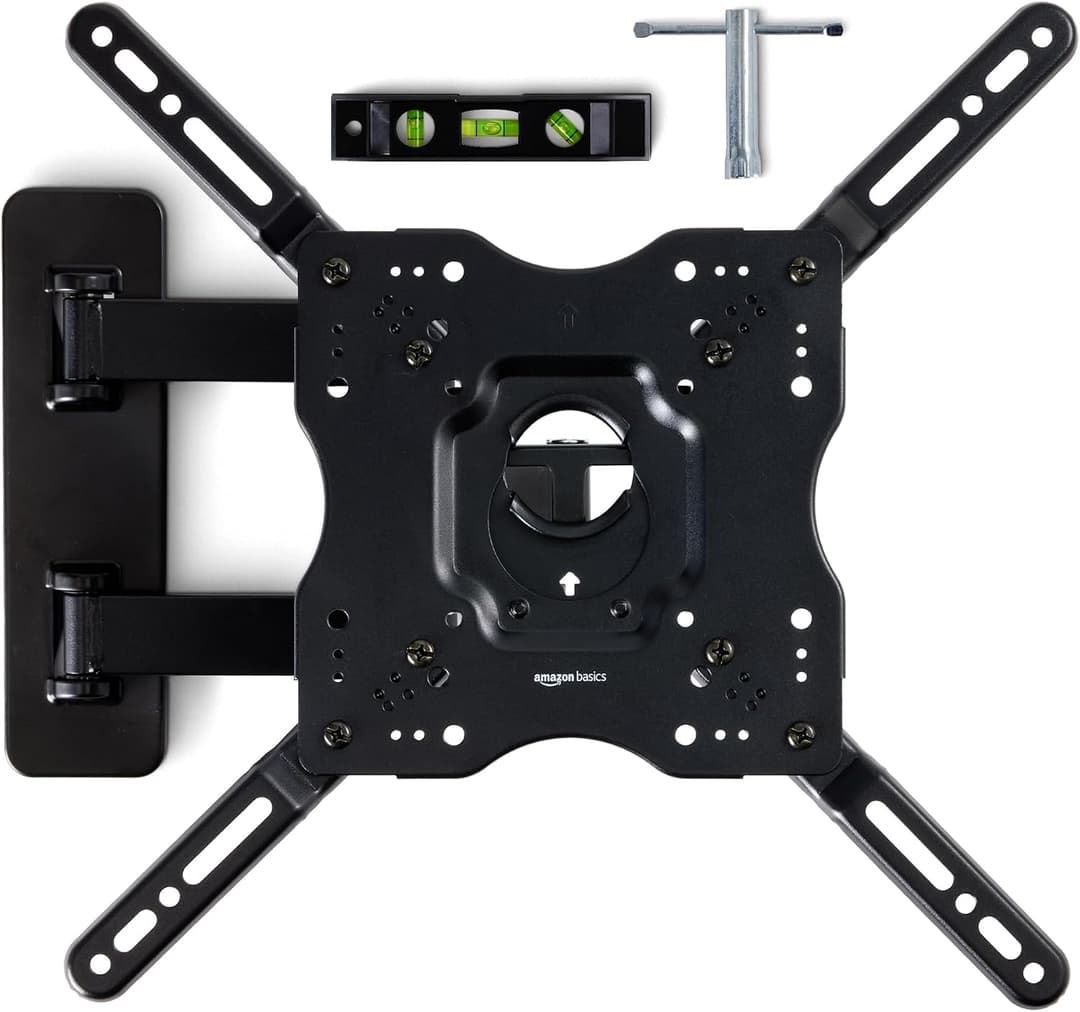
80 lbAmazon Basics Full Motion Mount, 26-55in
99 lbEconoMe Full Motion Mount, 32-65in
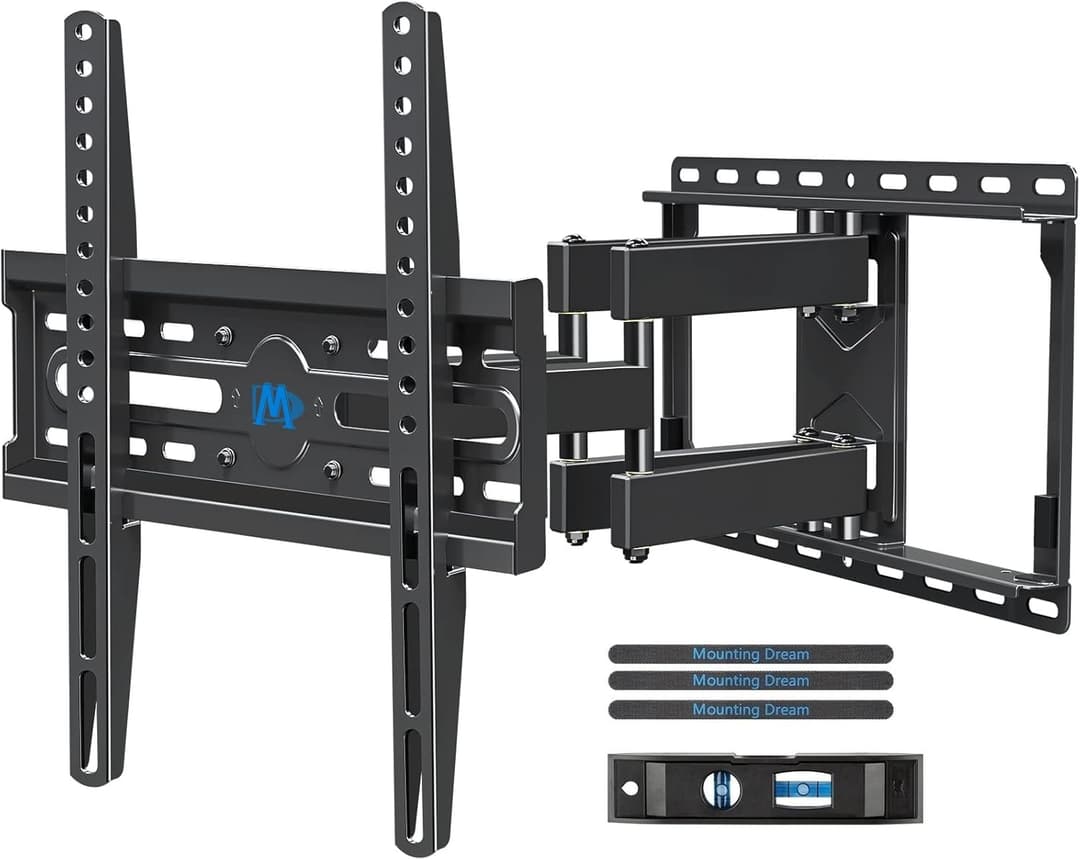
99 lbMounting Dream MD2380 Full Motion, 32-70in
99 lbNo-Stud Drywall TV Hanger, 12-55inno studs
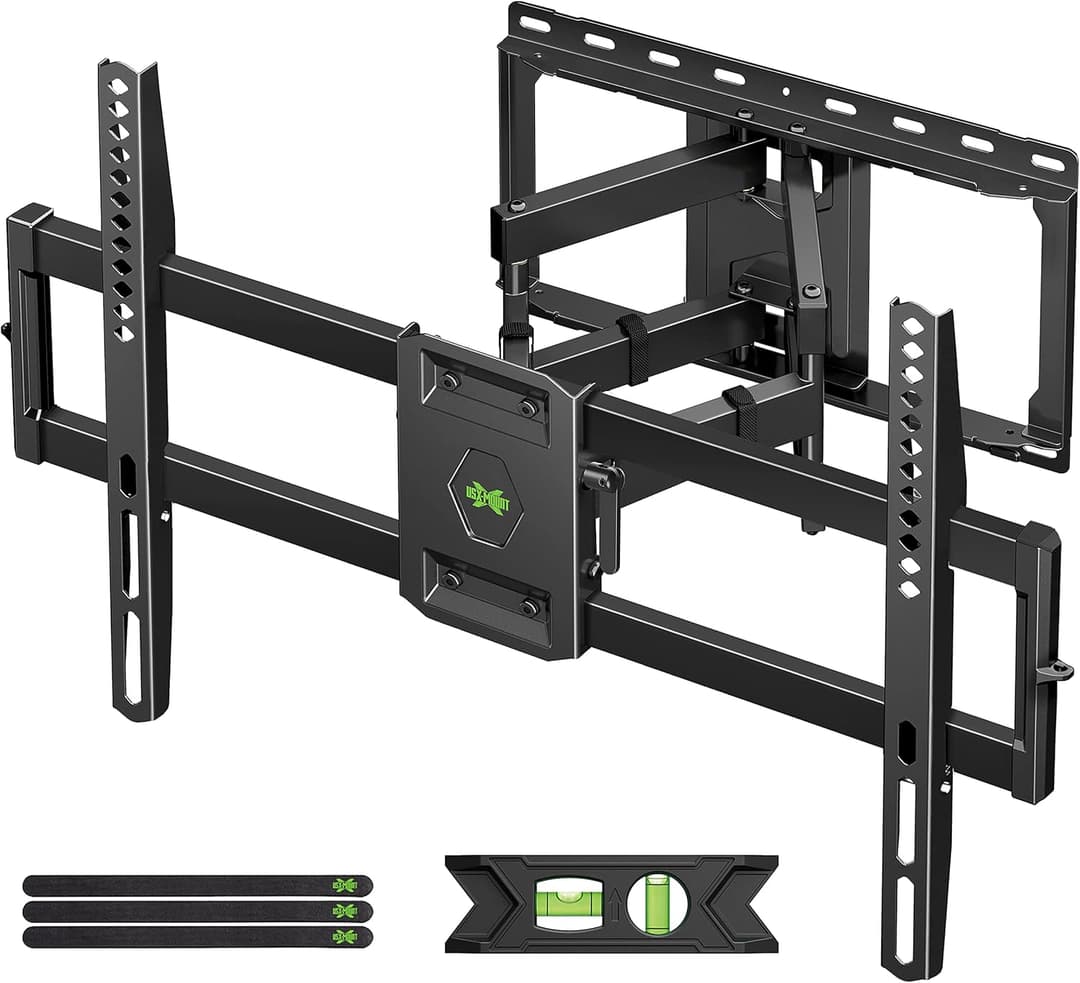
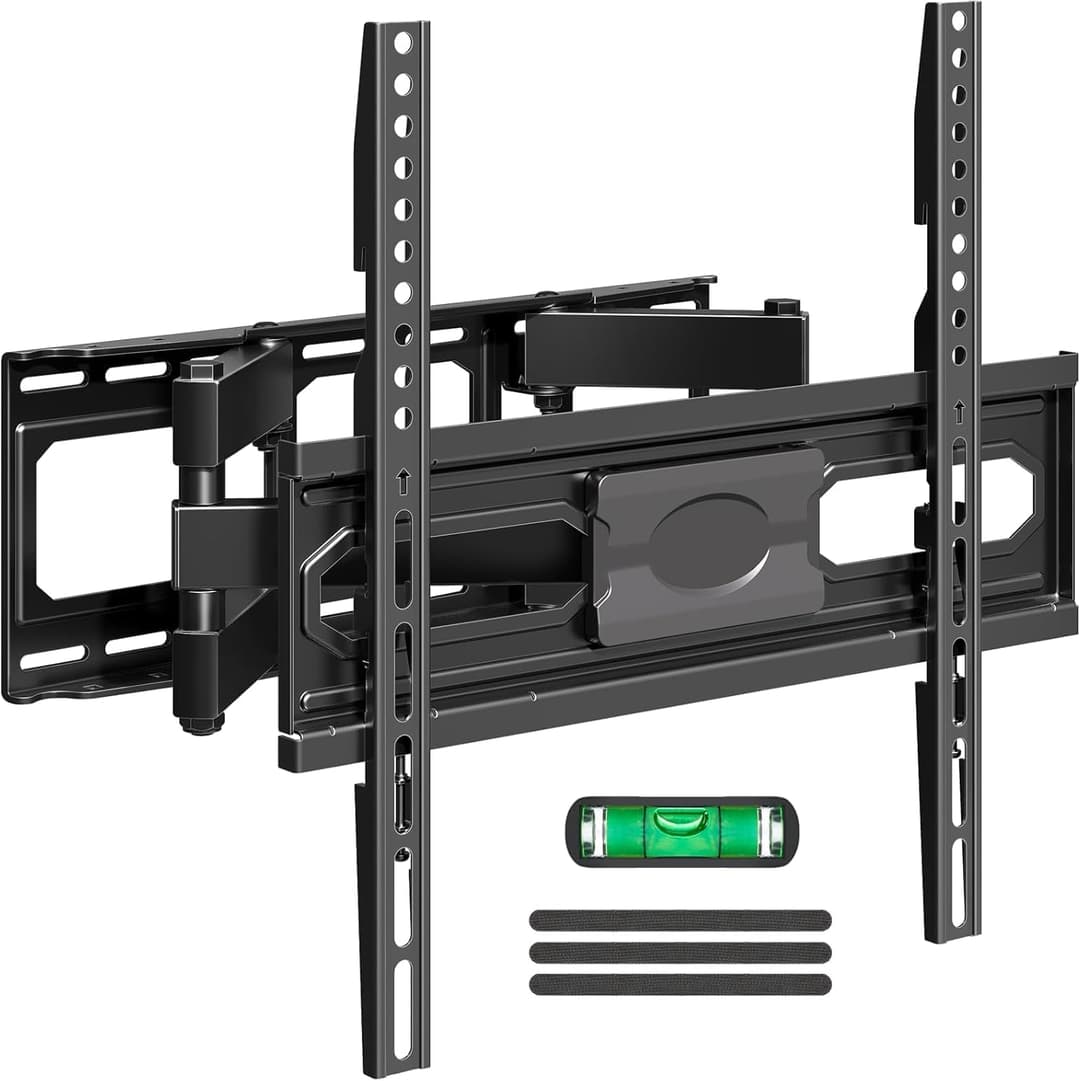
99 lbUSX Mount Full Motion, 32-70in
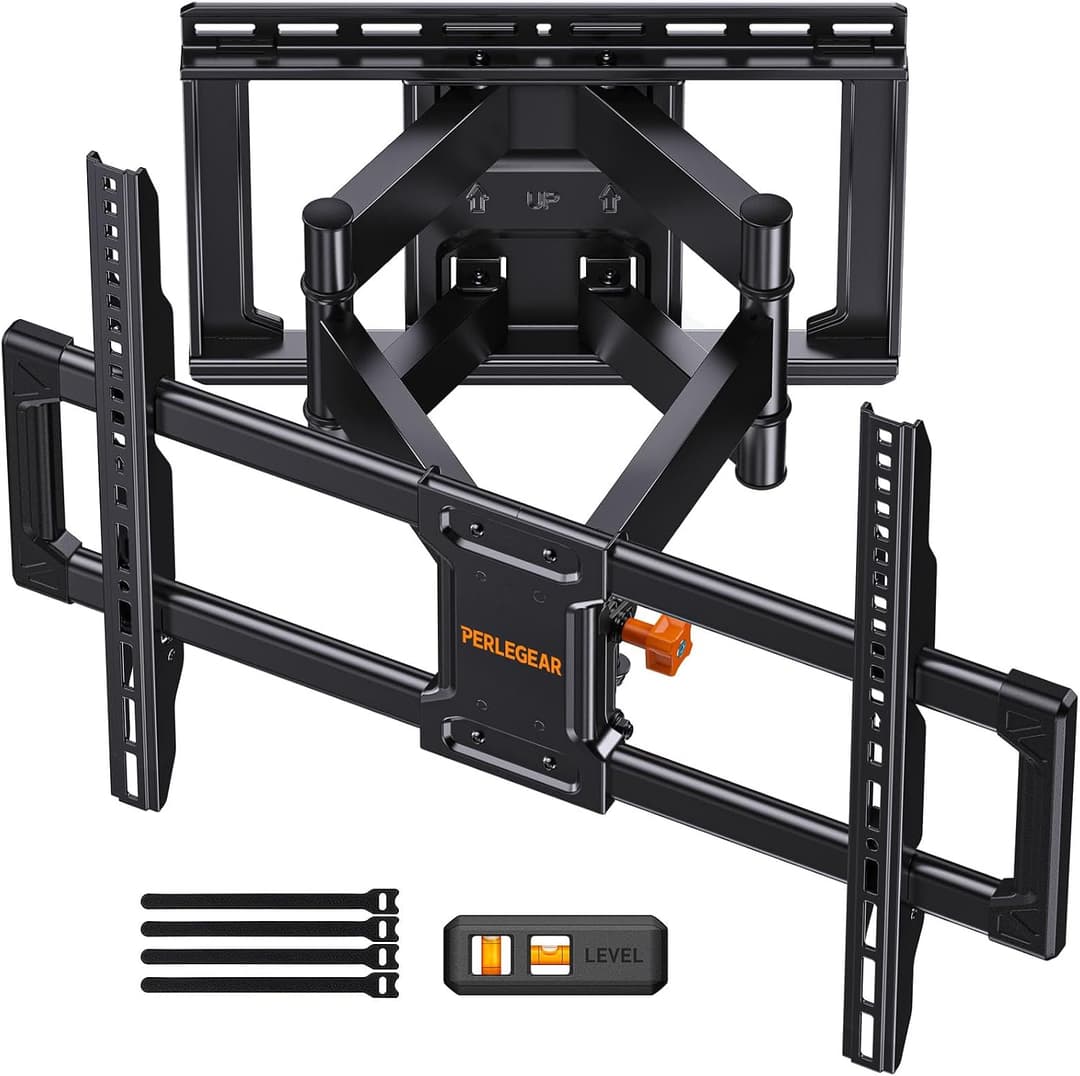
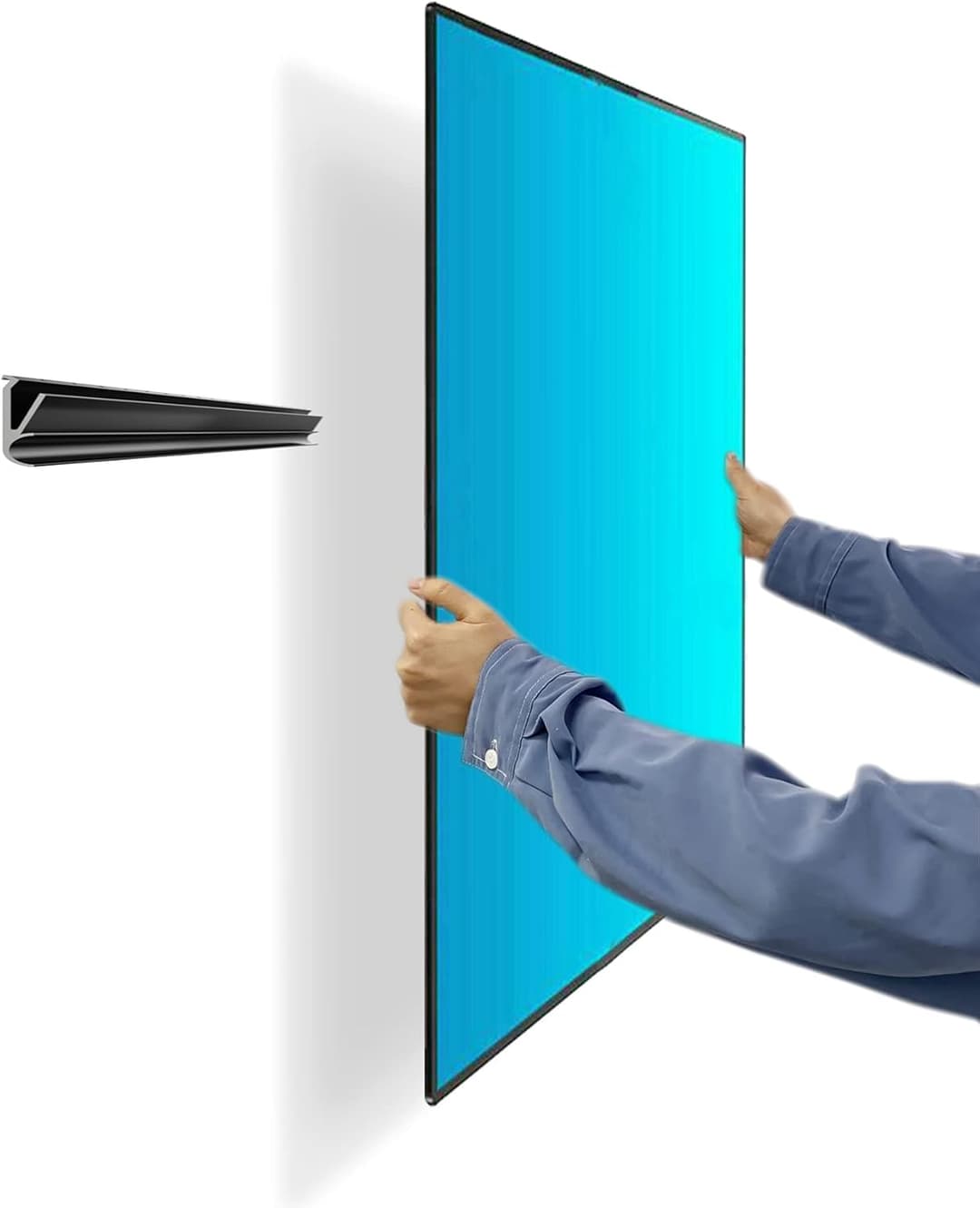
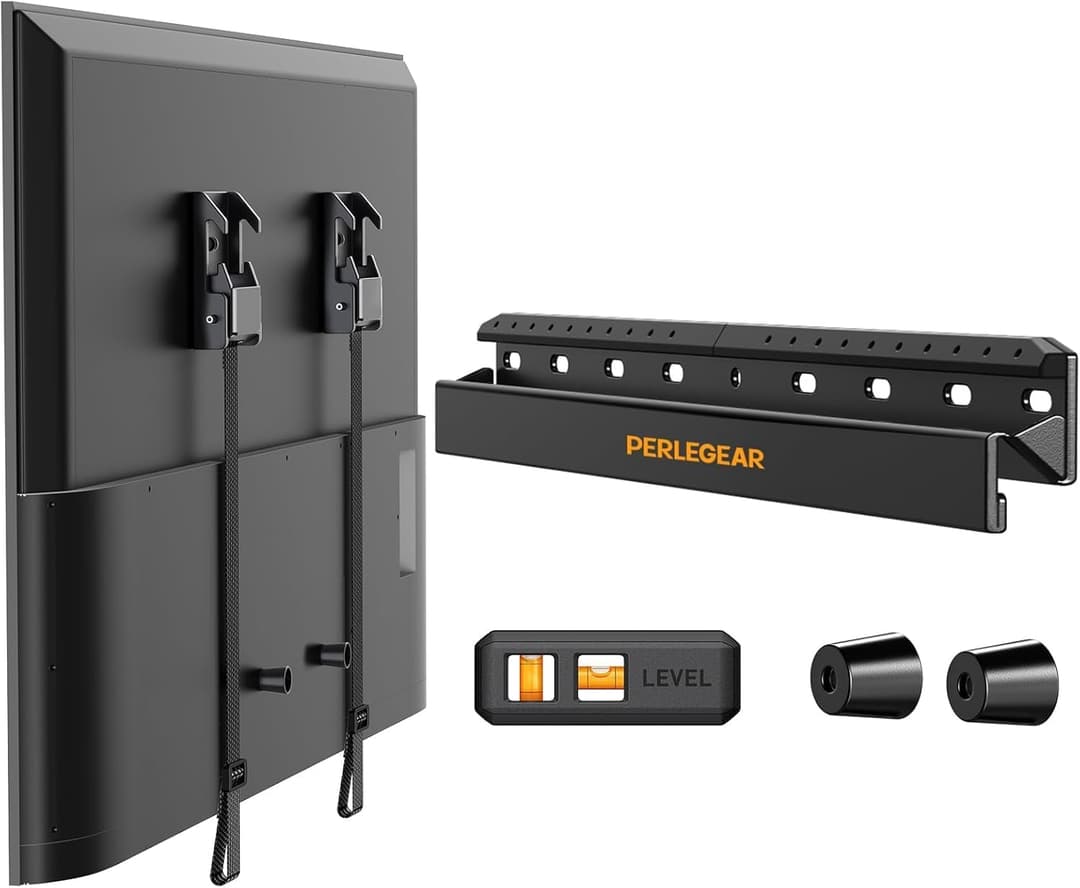
100 lbPerlegear No Drill TV Mount, 24-65inno studs
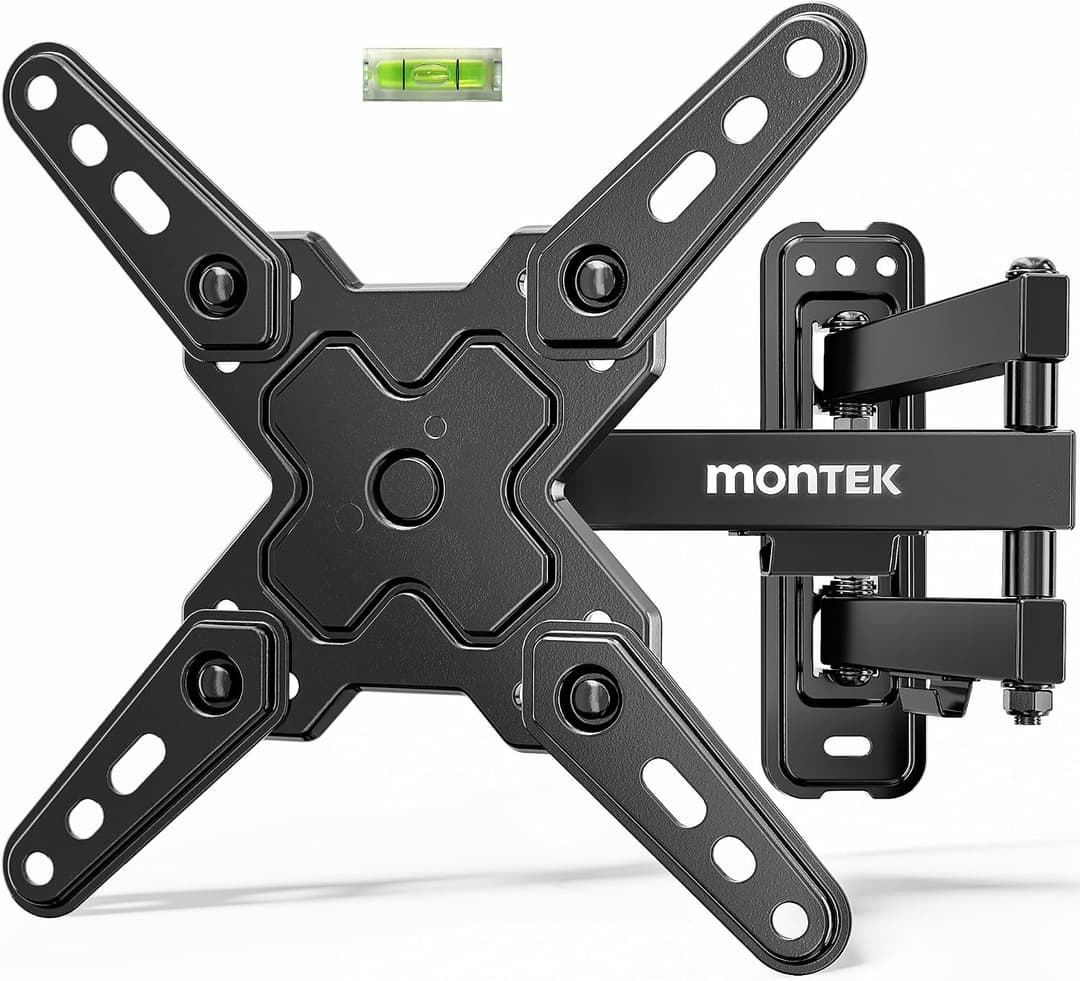
monTEK Full Motion Small Mount, 13-43in.The same stated load as the bracket beside it and a different question attached: this is the only listing here that puts a figure on how far the arm comes out.
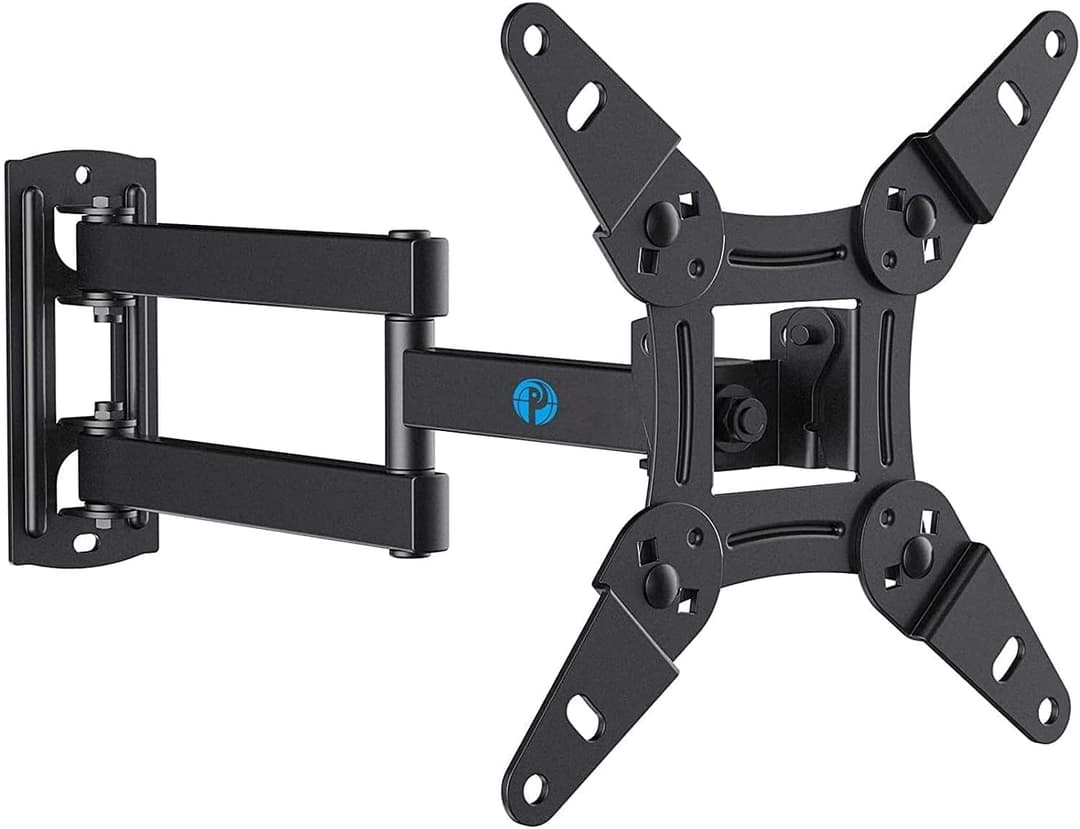
Pipishell Full Motion Mount, 13-43in.Left end of the line alongside the other small-panel bracket. The stated figure sits where you would expect for a listing whose size range stops at 43 in.
ELIVED Full Motion Mount, 26-60in.Same stated figure, shortest list of stated features in the cluster. The listing names no stud spacing at all.
USX Mount Single Stud Full Motion, 26-60in.Same stated figure on a single stud, and the only listing on this page that names a corner as the intended position.
USX Mount XMM006 Full Motion, 26-65in.Just left of the 80 lb bracket, and the only listing in the 77 lb cluster that names a UL mark.
Amazon Basics Full Motion Mount, 26-55in.Alone in the gap between the small-panel pair and everything above it. The listing names a single stud, the narrowest span of wall structure on this page.
EconoMe Full Motion Mount, 32-65in.The same stated figure as the two dual-arm brackets beside it, on a size range that stops at 65 in.
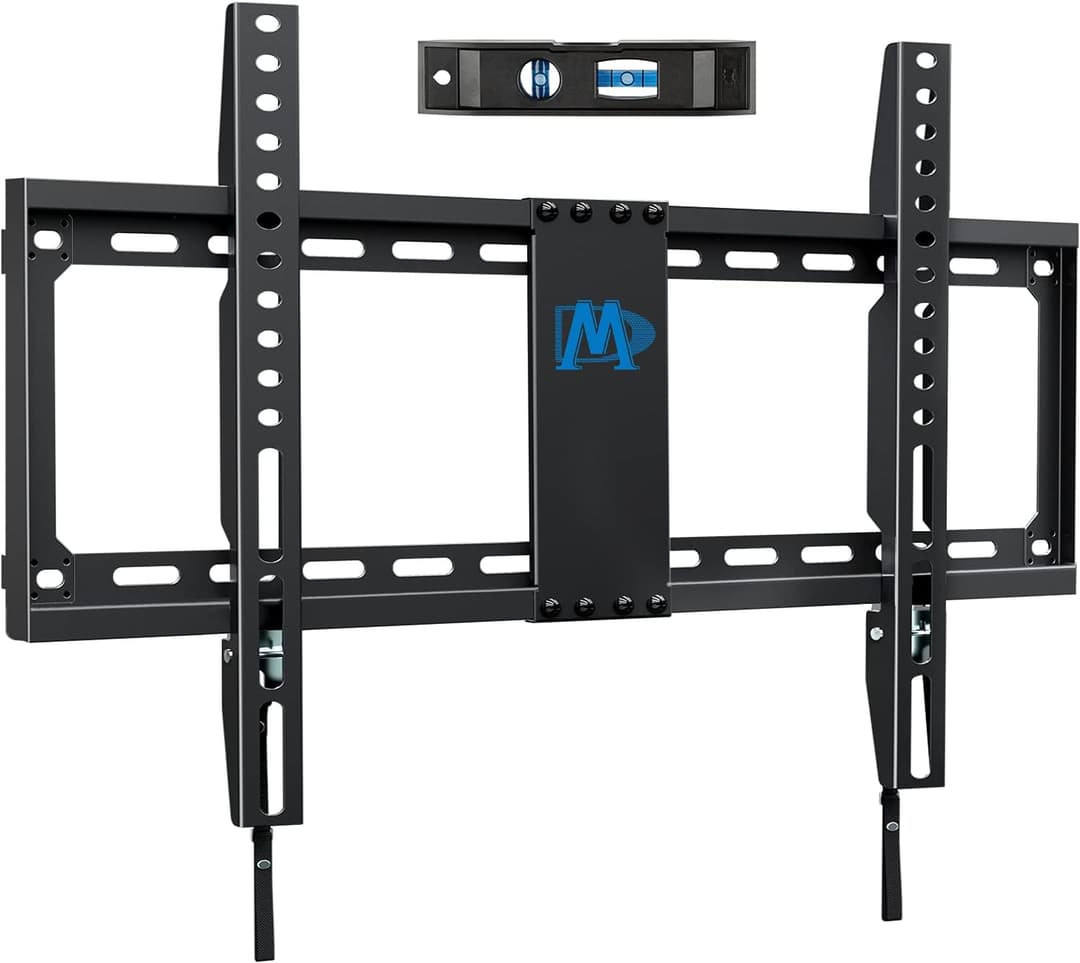
Mounting Dream MD2380 Full Motion, 32-70in.Middle of the line on dual arms. The stated VESA pattern stops at 400x400, so the panel has to clear that before the load figure means anything.
No-Stud Drywall TV Hanger, 12-55in.The same stated figure as the bracket beside it and an entirely different claim behind it, because this one states that figure without fixing into studs. Read the caution on its card before the number.
USX Mount Full Motion, 32-70in.Middle of the line on dual arms, and the only bracket here to name 12 in studs alongside 16 in. The VESA pattern stops at 400x400.
Perlegear No Drill TV Mount, 24-65in.Just right of the 99 lb group, and the second bracket here to state its figure without fixing into studs. Read the caution on its card before the number.
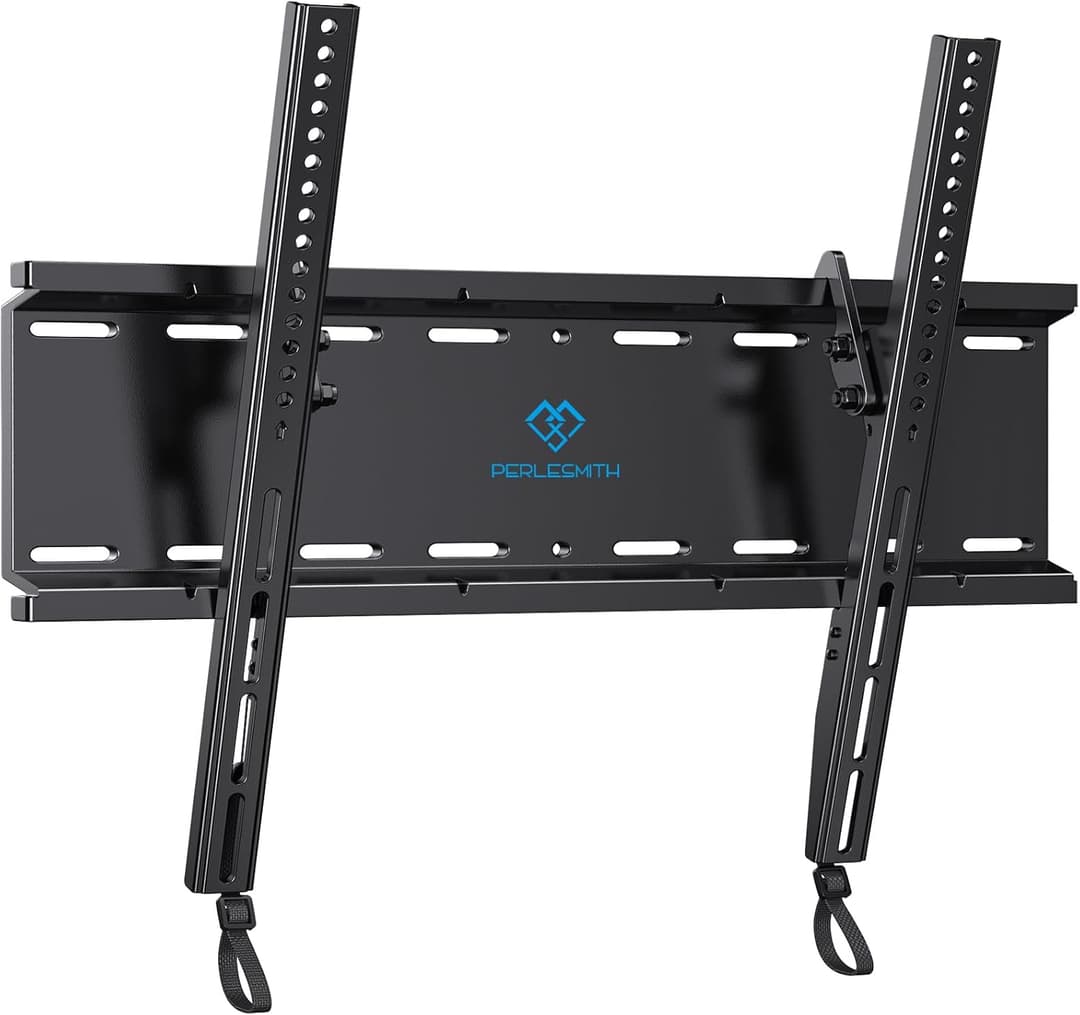
PERLESMITH Tilting Mount, 23-60in.The only stated figure between 99 and 132 lb. Tilt only, low profile, and a single 16 in wood stud named in the listing.
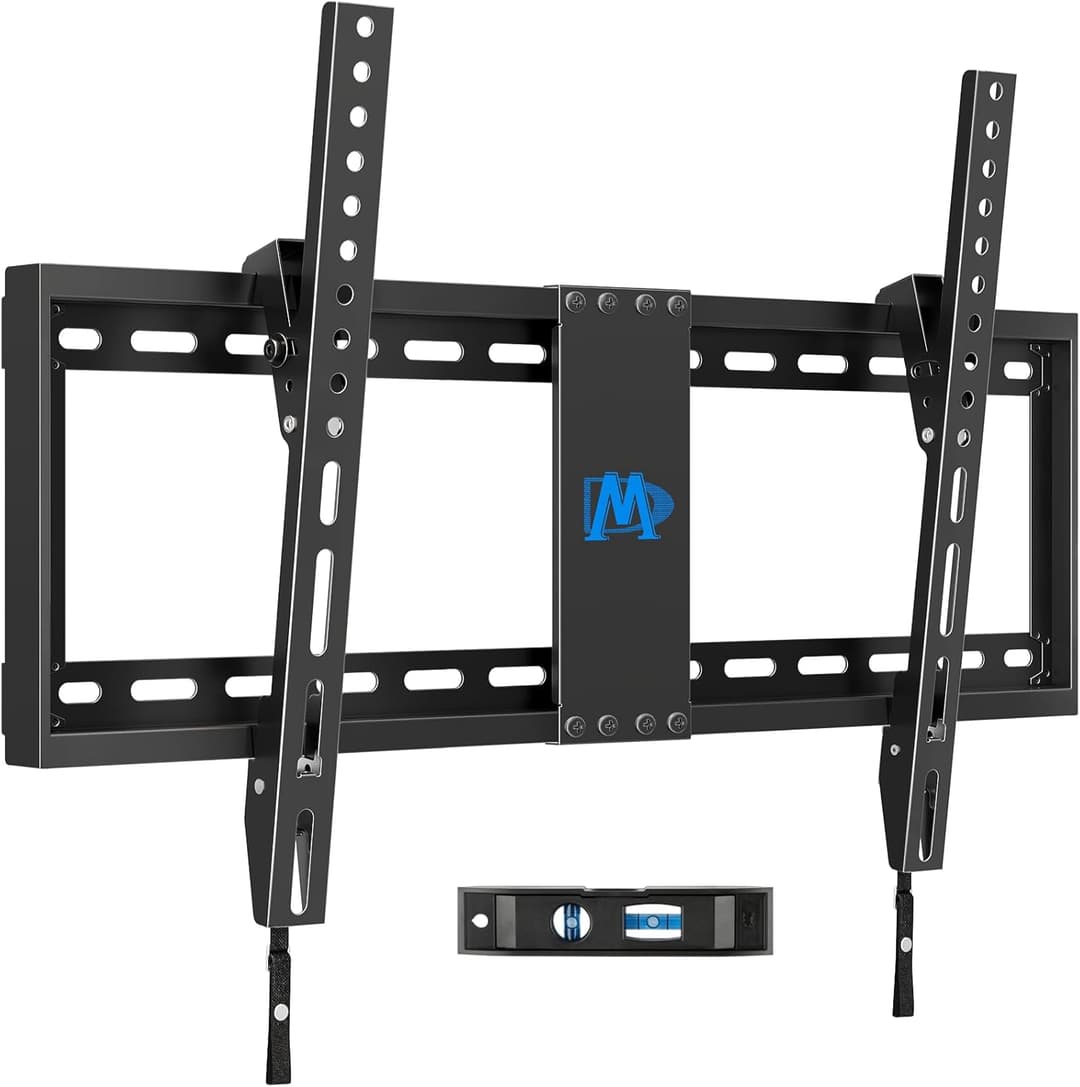
Mounting Dream MD2268-LK Tilting Mount, 37-90in.Same stated figure on a tilt-only body, and the widest range of stud spacing named anywhere on this page.
Perlegear PGLF8 Full Motion Mount, 42-90in.In the right-hand cluster. Of the listings stating 132 lb, this is the one that names both a UL mark and dual articulating arms.
USX Mount Full Motion, 42-90in.Same stated figure again, on dual swivel arms, with 16 in wood studs named as the spacing limit rather than a range.
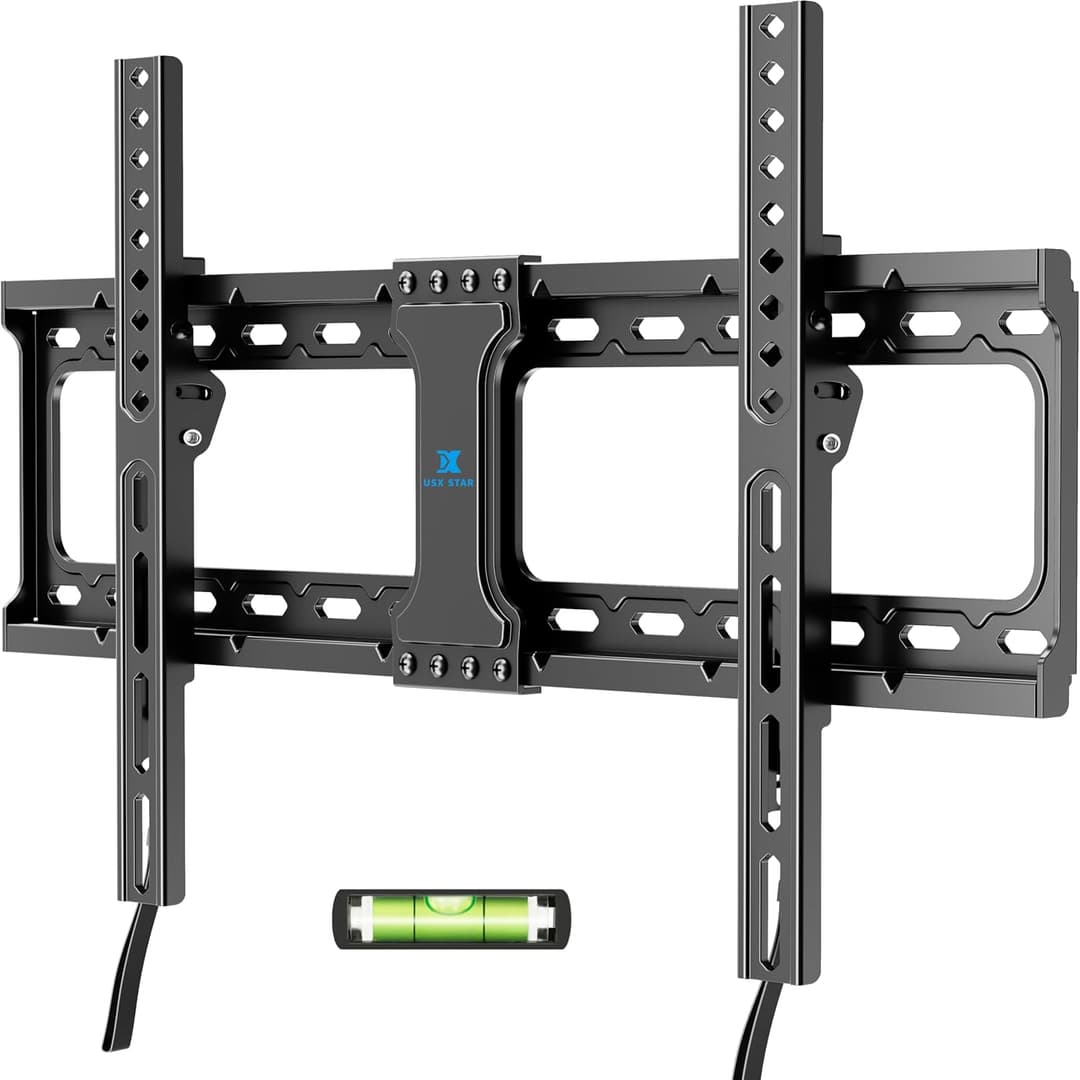
USX STAR Fixed Mount, 37-86in.Same stated figure with no movement at all. A fixed body holds the panel closest to the wall and leaves nothing to adjust once it is up.
Not stated
These listings name a size range and a body type and never state a load figure. There is nothing to place on the line, so nothing is placed, and the figure has to come from the manufacturer.
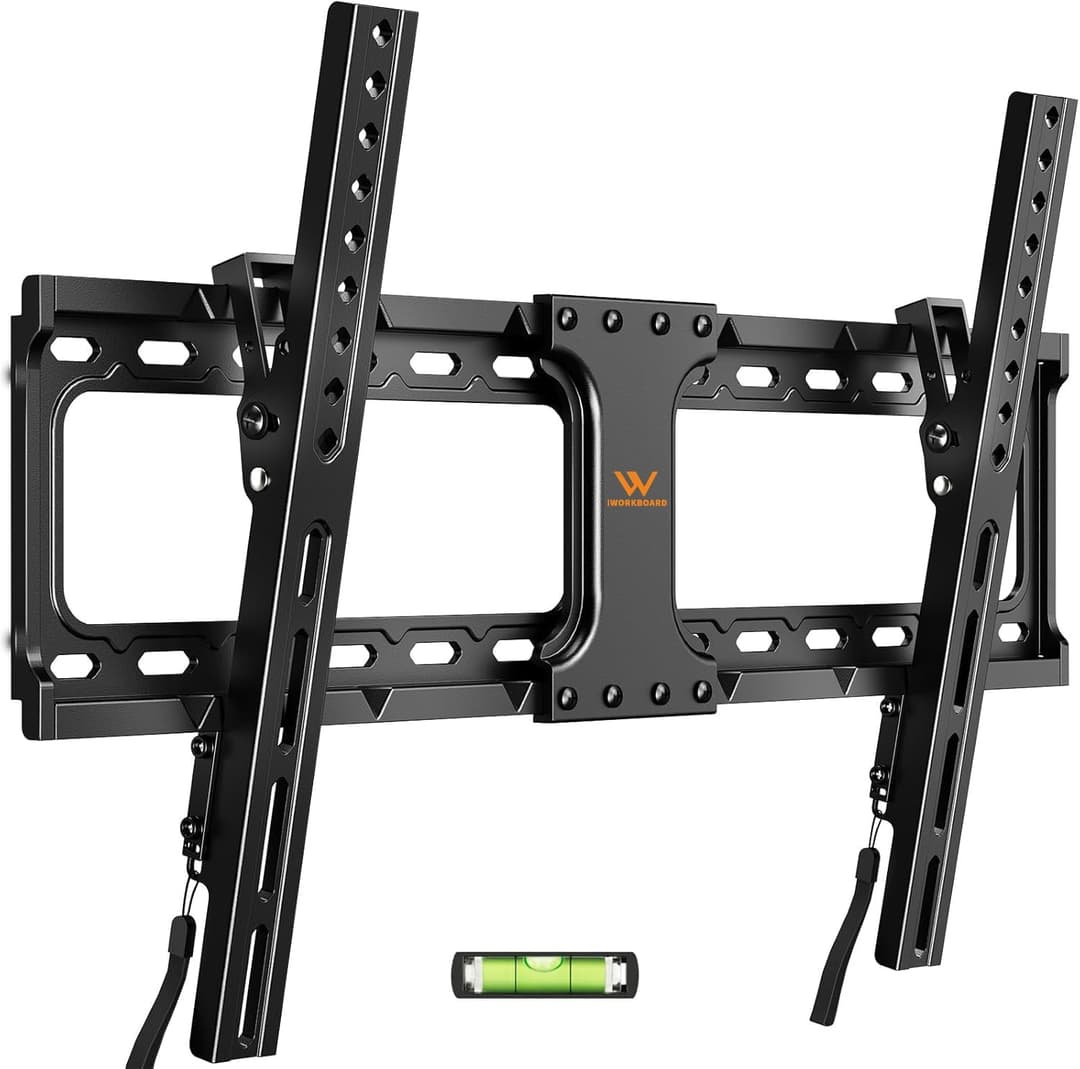
IWORKBORAD Tilting Low Profile Mount, 55-85in
Not stated
Mounting Dream MD2163-K Fixed Mount, 42-84in
Not stated
Core job
Carry the weight of the panel into the structure of the wall, and hold the screen center at the height you measured.
Subgroups
Full motion
Arms that extend, swivel and tilt. Reach costs depth behind the panel and puts more leverage on the same fasteners.
Tilting
Held in place with downward tilt only. Fewer moving parts and a shallower gap behind the panel.
Fixed
No movement at all. The shallowest gap and the fewest parts, which means the position has to be right before the panel goes up.
Small panels
Brackets whose stated size range stops well below the large-panel group. Read the stated VESA pattern and the stated size range together, not separately.
No-stud
One listing states a load without fixing into studs. It is kept apart from everything else here and it carries the longest caution on this site.
Buying order
Read the weight and the VESA pattern out of your panel’s own documentation, and measure the wall width you have. Nothing on this page is decided before those three numbers exist.
Find the studs with a stud finder and mark them. Their spacing rules out brackets before any figure on this page does.
Decide how much movement the room actually needs. Travel you never use still costs depth behind the panel and leverage at the wall.
Only then compare stated load, and only among brackets that already fit the panel and the studs you have. The line is the last filter, not the first.
Do not buy a bracket to get around a wall you are unsure about. That is the point where the money goes to an installer instead.
Skip these
A bracket chosen because its stated load is a large number. That figure is a ceiling quoted by a listing, not headroom you can verify.
Full motion in a room where the seat never moves. You pay in depth and leverage for travel that stays folded.
A no-stud fixing for a large panel. Size and weight are exactly the conditions under which the claim needs an installer’s judgment rather than yours.
Any bracket bought before the panel’s documentation has been read for weight and VESA pattern.
Replacement fasteners from a hardware drawer. Use what the bracket documentation specifies, or ask the maker.
Category cautions
Stop
The wall holds the panel. The bracket only connects the two. Every load figure on this page is what a listing states, and none of it is an assessment of your wall.
Stop
Locate studs with a stud finder. Do not decide where a stud is by any other method, and do not decide a wall is adequate because a bracket states a number.
Stop
If you cannot confirm what the wall is built from, cannot locate studs, or would not lift the panel alone, stop and bring in an installer. That is the whole decision, and it is not a difficult one.
Stop
In a home with children or animals, an articulating arm is something that gets pulled. Keep it folded when it is not in use, keep climbable furniture away from the wall, and treat any movement or creak in the bracket as a reason to stop using it.
Note
No fastener torque figure appears anywhere on this site. Tightening figures come from the documentation for your bracket and from nowhere else.
Full motion
132 lb stated with a UL mark
Perlegear PGLF8 Full Motion Mount, 42-90in
Full motion
The listing states
Up to 132 lb
VESA up to 600x400
Dual articulating arms
Tool-free tilt and swivel
Fits 16 in studs
UL Listed
Fits panels 42 to 90 in
The listing states 132 lb, VESA up to 600x400, a fit for 16 in studs, and UL Listed, on a dual-arm body.
Read firstThe listing names a size range and a tilting low profile body and states no load figure. There is nothing to place on the line, so nothing is placed. The figure has to come from the manufacturer documentation before a panel this size goes anywhere near it.
Read firstThe listing names a UL mark and a size range up to 84 in and states no load figure. It is kept off the line, and the figure has to come from the manufacturer documentation.
Read firstThe listing also states a fit for a smart display. That is a different class of object from a panel, and it is not part of the load comparison on this page.
Read firstThe listing states up to 99 lb without drilling into studs. That is the listing making a claim, and it is repeated here as a claim and nothing else. What a sheet of drywall holds depends on the material, the thickness, the age and the condition of that wall, and on what sits behind it. None of that is known to the listing and none of it can be seen from this page. Only the owner of the wall can assess it, and for a large panel that assessment belongs to an installer. Read the manufacturer documentation in full before anything is hung.
Read firstThe listing states up to 100 lb with no drilling. That is the listing making a claim, and it is repeated here as a claim and nothing else. What a wall holds without fasteners into structure depends on the material, the thickness, the age and the condition of that wall. None of that is known to the listing and none of it can be seen from this page. Only the owner of the wall can assess it, and for a large panel that assessment belongs to an installer. Read the manufacturer documentation in full before anything is hung.